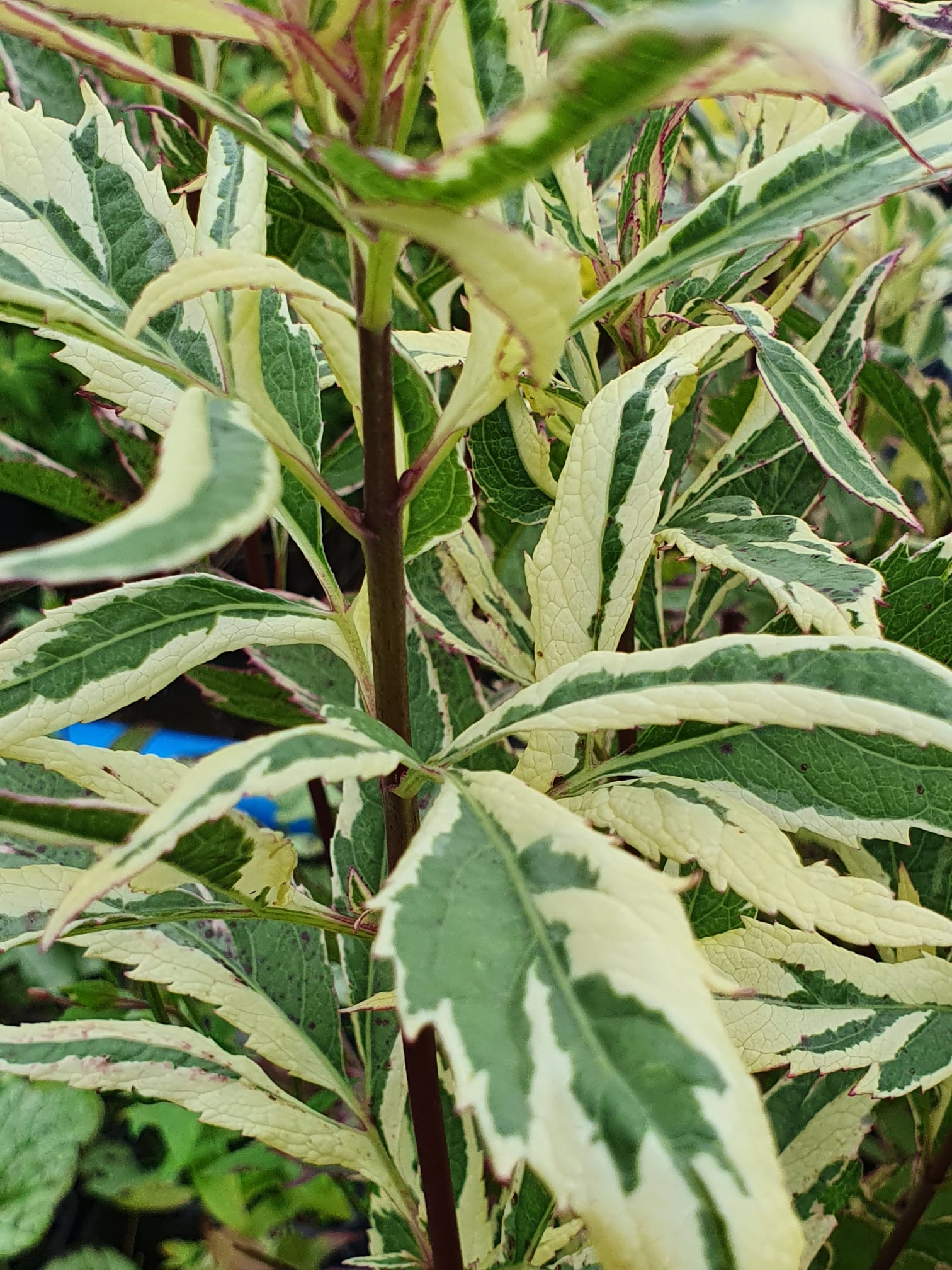
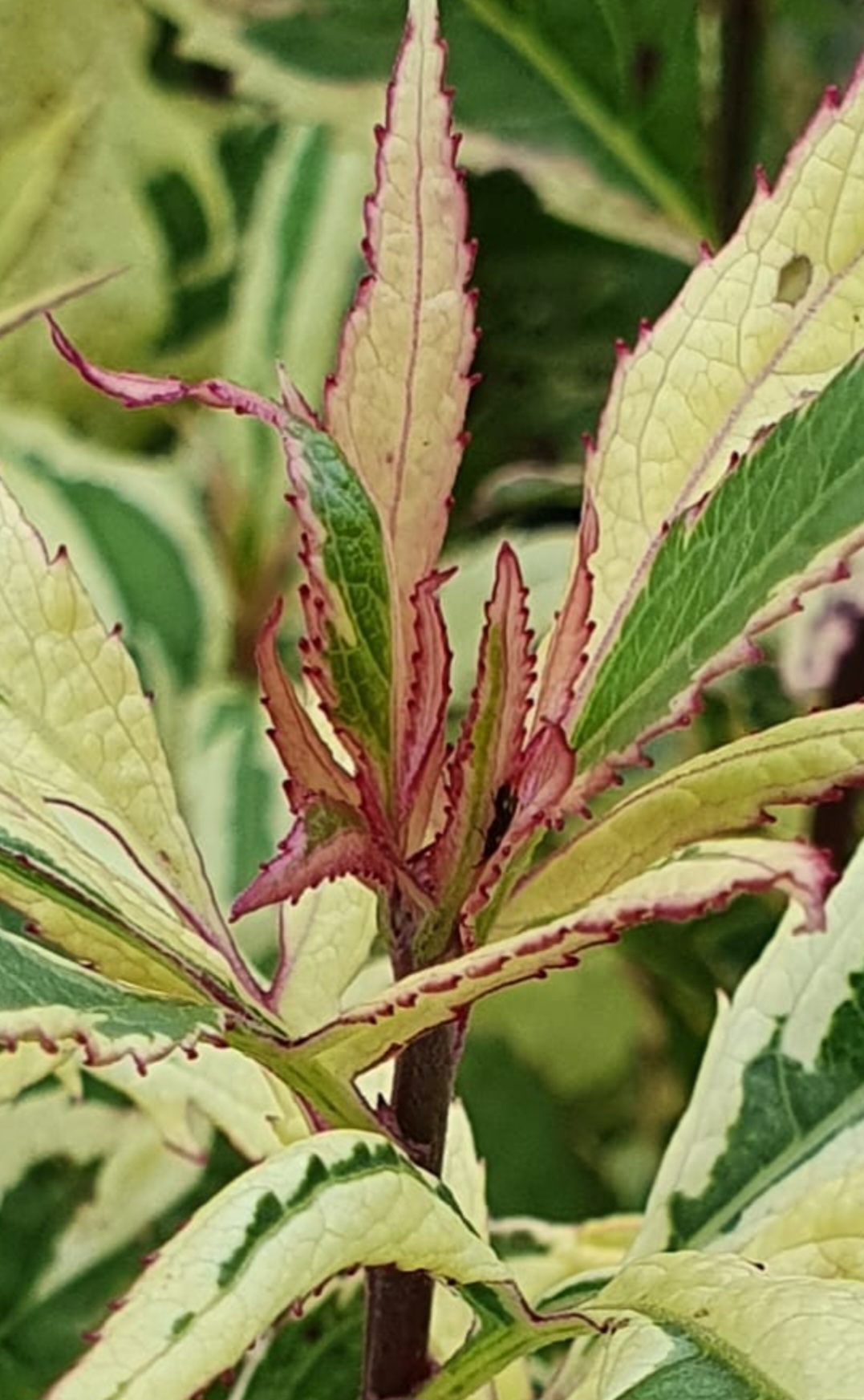
A dwarf variety with frilled, feather like foliage which is emerald green, lined and edged with soft cream and kissed with pink and rose. Tiny lavender pink flowers make a stunning display from mid summer to autumn. Height and spread 60cm. Prefers damp soil in sun or partial shade. Attracts bees and butterflies. Hardy.
Eupatorium fortunei ‘Capri’ is a striking dwarf perennial celebrated for its frilled, feather-like foliage and delicate lavender-pink blooms. Its compact size, ornamental colouring, and wildlife appeal make it an excellent choice for borders, damp garden areas, and mixed planting schemes. Follow this comprehensive guide to help your Eupatorium fortunei ‘Capri’ flourish.
PLANTING and AFTERCARE GUIDE
Best Planting Time
Spring: Planting Eupatorium fortunei ‘Capri’ in spring allows the roots to settle into warming soil. This promotes strong early growth and sets the plant up for an abundant summer display.
Autumn: Alternatively, Eupatorium can be planted in early autumn, giving it time to establish before resting and resuming vigorous growth the following season.
Site Selection
Sunlight: Eupatorium thrives in full sun or partial shade. Choose a site that receives several hours of gentle daylight to support lush foliage and flower production.
Soil: This perennial prefers damp, moisture-retentive soil that drains well. Amending the planting area with organic matter helps maintain the consistent moisture levels Eupatorium fortunei ‘Capri’ enjoys.
Planting Instructions
Prepare the Hole: Dig a planting hole twice as wide as the root ball and equal in depth. This provides ample space for Eupatorium fortunei ‘Capri’ to develop a healthy, stable root system.
Soil Preparation: Enrich the soil with compost or well-rotted organic matter. This boosts nutrition and improves moisture retention—ideal conditions for Eupatorium.
Planting: Position the plant so the top of the root ball sits level with the surrounding soil. Backfill gently, firming the soil to remove air pockets.
Watering After Planting: Water thoroughly to settle the soil around the roots. Keeping the planting area evenly moist helps Eupatorium fortunei ‘Capri’ establish quickly.
Watering Requirements
Growing Season: Eupatorium prefers consistently moist soil. Water regularly, ensuring the soil stays damp but never waterlogged.
Dormant Season: Reduce watering significantly during the plant’s dormant period. Only water if the soil becomes very dry, as Eupatorium fortunei ‘Capri’ needs minimal moisture at this time.
Feeding
Spring: Apply a balanced fertiliser to encourage vigorous new growth. This gives Eupatorium fortunei ‘Capri’ a strong start to the season.
Mid-Summer: A light additional feed supports continued flowering and maintains the plant’s vibrant foliage colouring.
Pruning
Deadheading: Remove spent flowers to keep the plant tidy and prolong the flowering season. Regular deadheading encourages fresh blooms.
Autumn Pruning: Once flowering ends, cut the stems back to ground level. This prepares the plant for winter rest and stimulates healthy regrowth in spring.
Mulching
Spring: Add a layer of organic mulch to help retain moisture, suppress weeds and maintain steady soil conditions.
Winter: A winter mulch offers additional root protection and stabilises soil temperature, supporting Eupatorium fortunei ‘Capri’ through colder months.
Supporting the Plant
Staking: Eupatorium fortunei ‘Capri’ has sturdy stems and a compact habit, so staking is rarely required. However, in exposed locations, a light support can help prevent wind damage.
Final Tips
Eupatorium fortunei ‘Capri’ is a low-maintenance perennial that provides long-lasting colour, intricate foliage, and excellent wildlife value. Plant it in sun or partial shade, give it moist soil, and follow this simple care routine to enjoy months of elegant blooms and foliage. With the right care, this Eupatorium will bring texture, movement, and beauty to your garden year after year.





 Select options


WILLIAM DENBIGH (verified owner) –