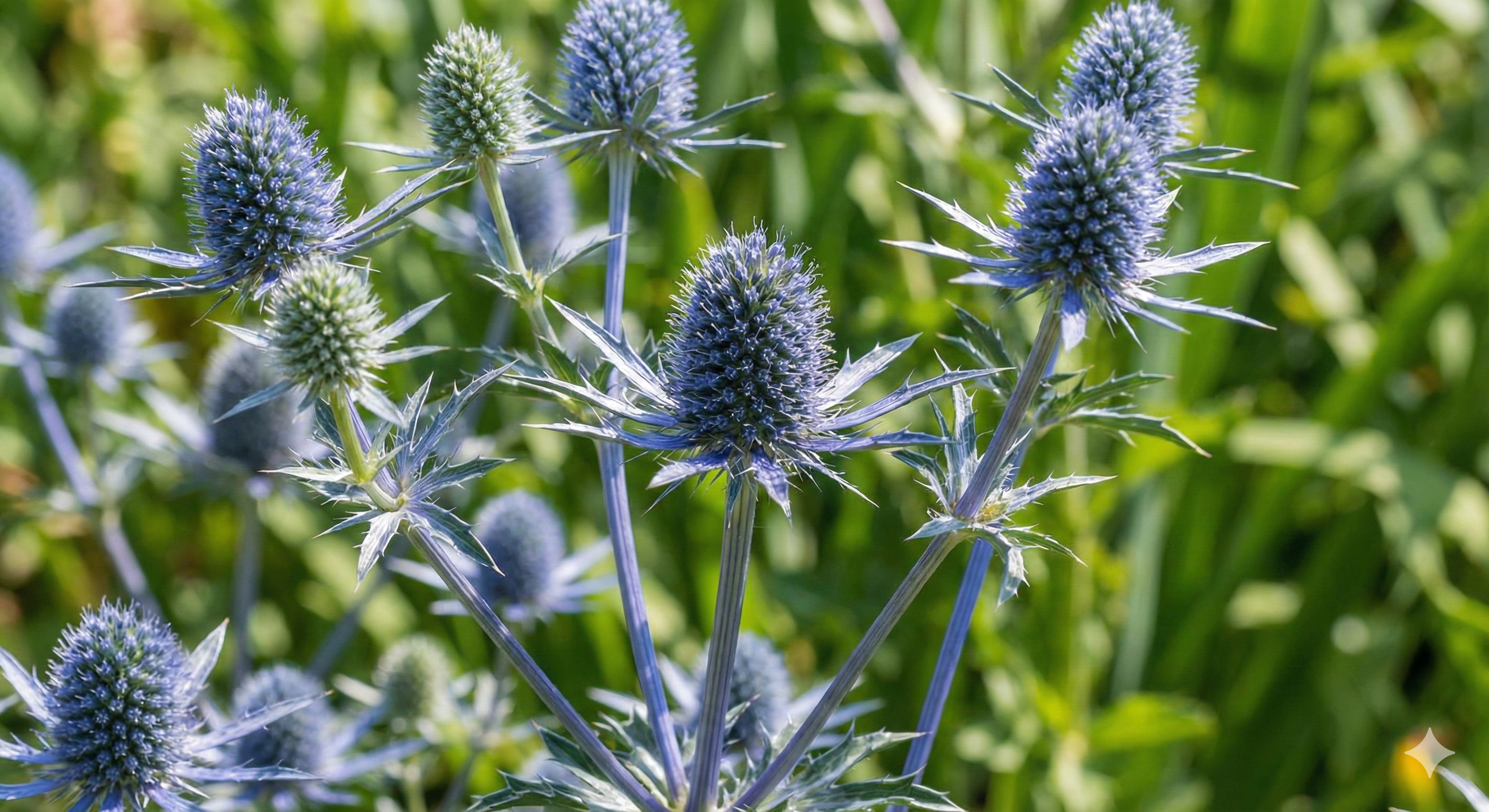
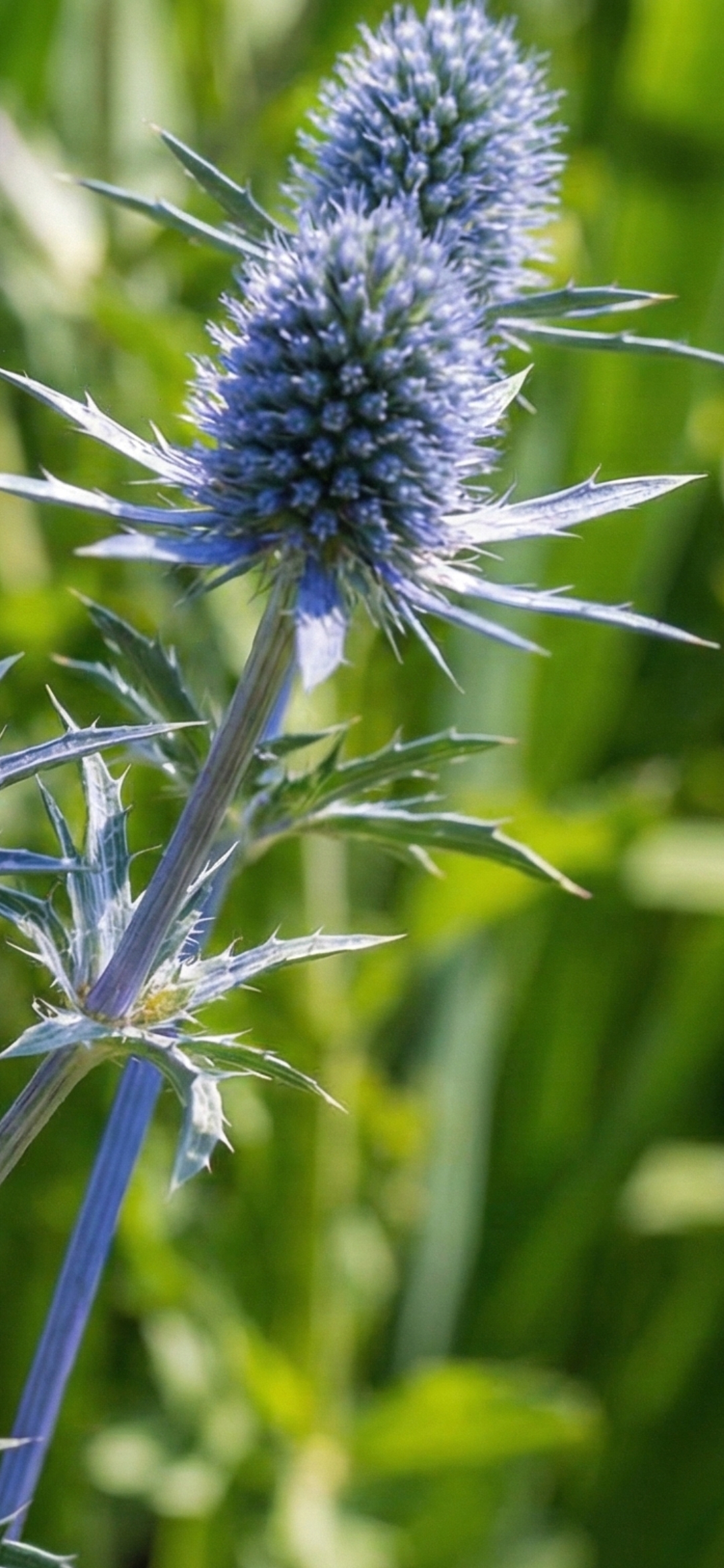
Sea Holly. Forms clumps of branched, slender stems carrying cone-like, intense- blue flowerheads with spiny bracts in late summer. Height 90cm. Spread 40cm. Flowers July to September. Full sun, well drained soil. Hardy.
Eryngium planum, commonly known as sea holly, is a striking perennial admired for its intense blue cone-shaped flowerheads and spiny bracts. Moreover, its architectural form and drought tolerance make it an excellent choice for sunny borders, gravel gardens, and wildlife-friendly planting schemes.
PLANTING and AFTERCARE GUIDE
Best Planting Time
Spring: The ideal time to plant Eryngium planum is when the soil begins to warm and becomes easy to work. This allows the roots to establish before the main flowering period.
Early Autumn: Alternatively, planting in early autumn gives Eryngium planum time to settle before dormancy, encouraging stronger growth the following season.
Site Selection
Sunlight: Eryngium planum thrives in full sun. Therefore, choose a location that receives plenty of direct sunlight each day to promote strong stems and vibrant blue flowerheads.
Soil: Well-drained soil is essential. Eryngium planum performs particularly well in lighter soils and dislikes waterlogged conditions. Improve drainage by incorporating grit or coarse sand if necessary.
Planting Instructions
Prepare the Hole: Dig a hole twice the width and the same depth as the root ball. This gives the roots space to spread and establish comfortably.
Soil Preparation: Mix compost or organic matter into the soil to improve structure while maintaining good drainage.
Planting: Place the plant into the hole so the top of the root ball is level with the surrounding soil. Gently backfill and firm the soil around Eryngium planum to remove air pockets.
Watering After Planting: Water thoroughly after planting to help settle the soil and support early root development.
Watering Requirements
Growing Season: Once established, Eryngium planum is relatively drought tolerant. Water during prolonged dry periods, allowing the soil to dry slightly between sessions.
Dormant Season: Reduce watering significantly when growth slows, as Eryngium planum prefers drier soil conditions during dormancy.
Feeding
Spring: Apply a light, balanced fertiliser in early spring to encourage healthy foliage and strong flowering stems.
Mid-Summer: Additionally, a gentle feed during the growing season can support vigorous flowering and overall plant health.
Pruning
Deadheading: Remove faded flowers to keep the plant tidy and encourage continued blooming.
Autumn Care: After flowering finishes, cut back the stems to maintain a neat shape and prepare Eryngium planum for its resting period.
Mulching
Spring Mulch: Apply a thin layer of mulch around the base to suppress weeds and help maintain soil structure.
Protective Mulch: In colder months, a light mulch can help protect the roots and stabilise soil conditions.
Supporting the Plant
Natural Growth Habit: Eryngium planum generally has sturdy stems that do not require staking. However, planting among other perennials can provide additional support in exposed locations.
Final Tips
Eryngium planum is a hardy, low-maintenance perennial that adds texture and bold colour to sunny gardens. By planting Eryngium planum in a bright position with well-drained soil and minimal watering, you will enjoy striking blue flowerheads from mid to late summer year after year.




 Select options

Anonymous (verified owner) –
Good quality plants arrived safely and on time
Kerry Sykes (verified owner) –
Well packed, plants in good condition. I would use you again.
Anonymous (verified owner) –
All plants were well packaged, fresh, reasonable prices and arrived in good time
Angela Pankhurst (verified owner) –
very healthy plant