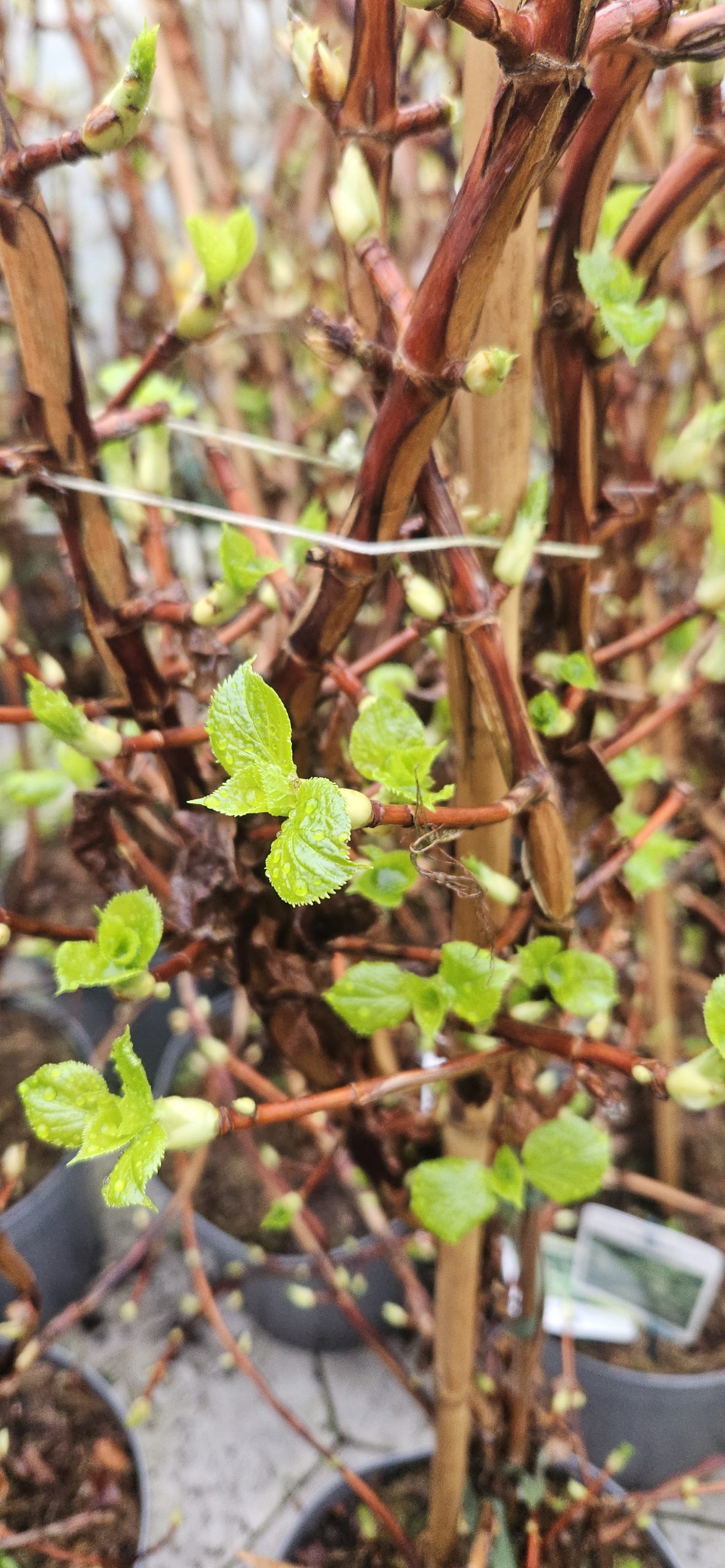
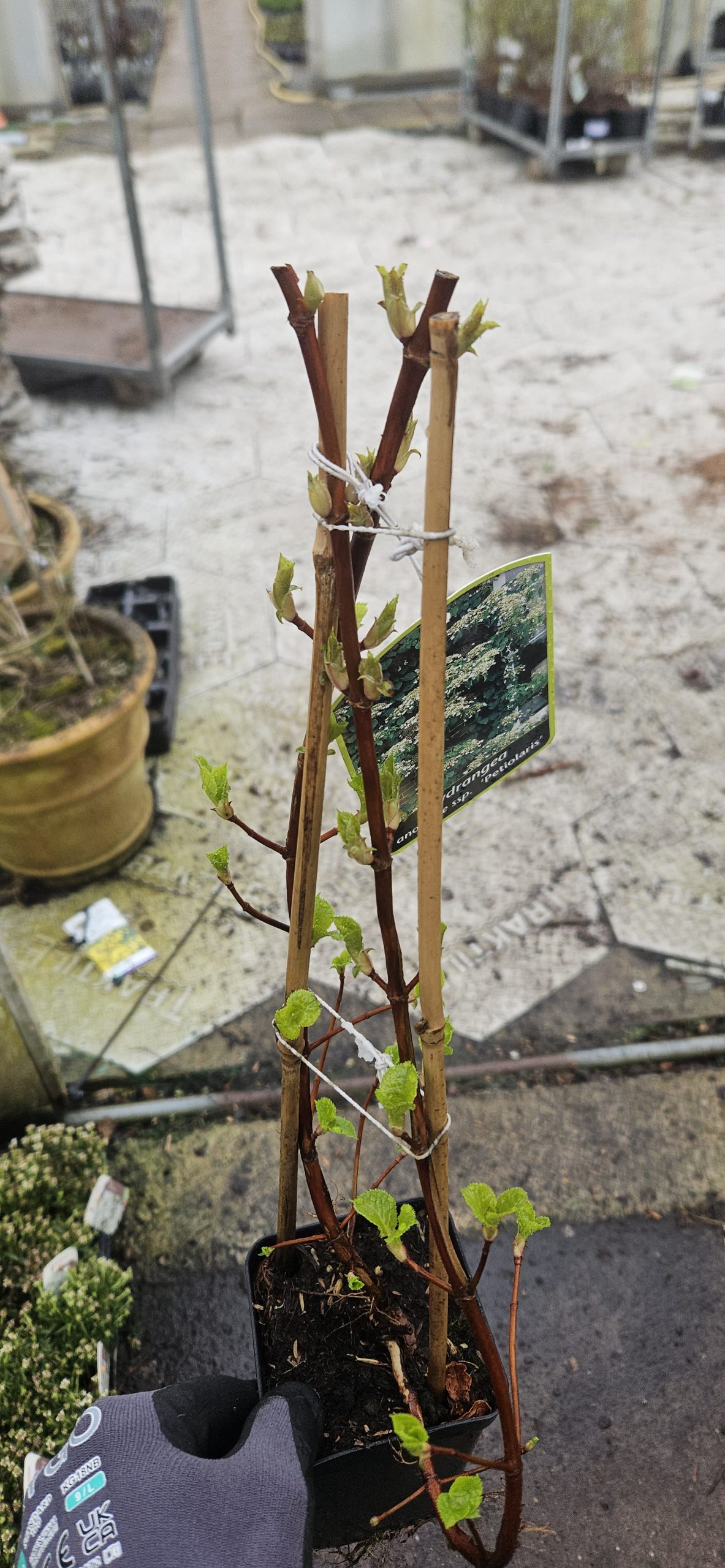
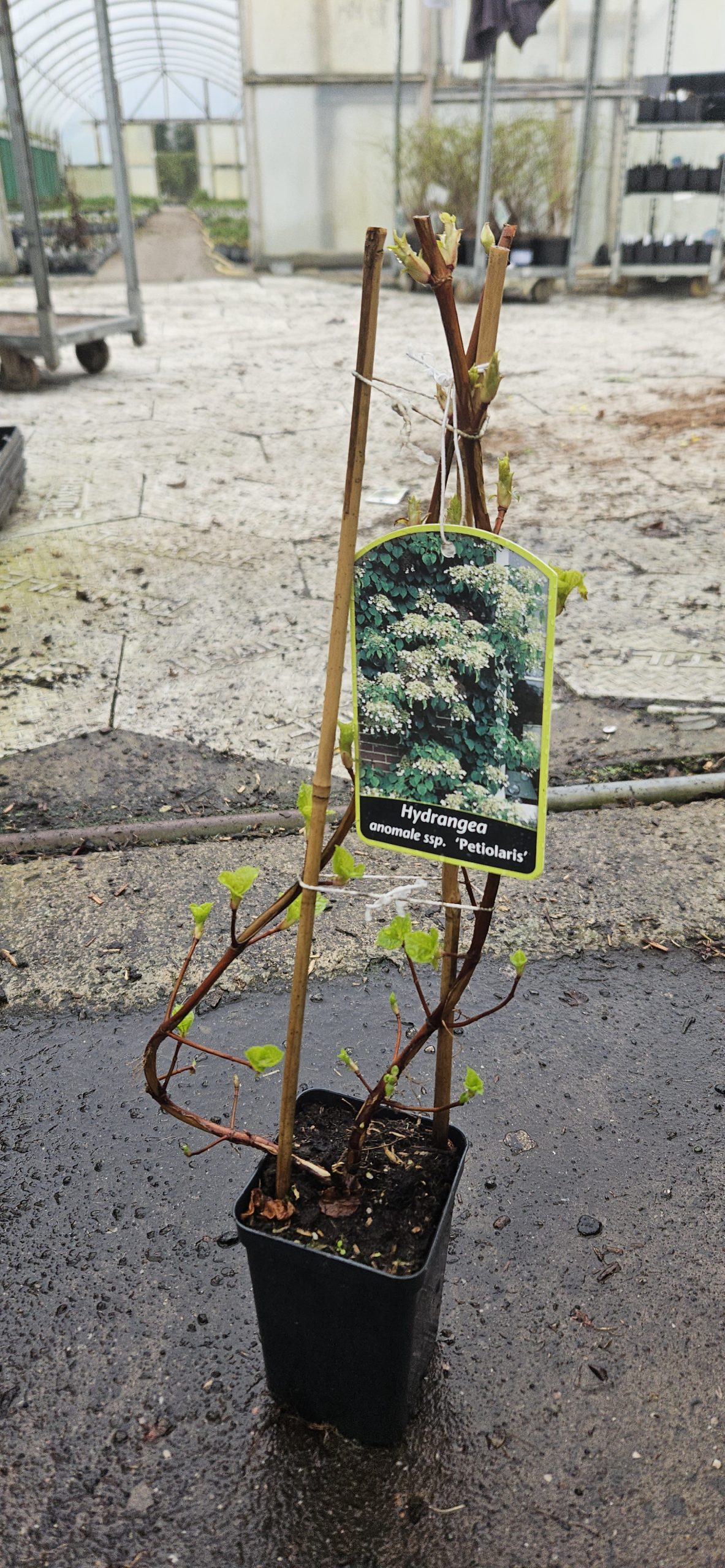
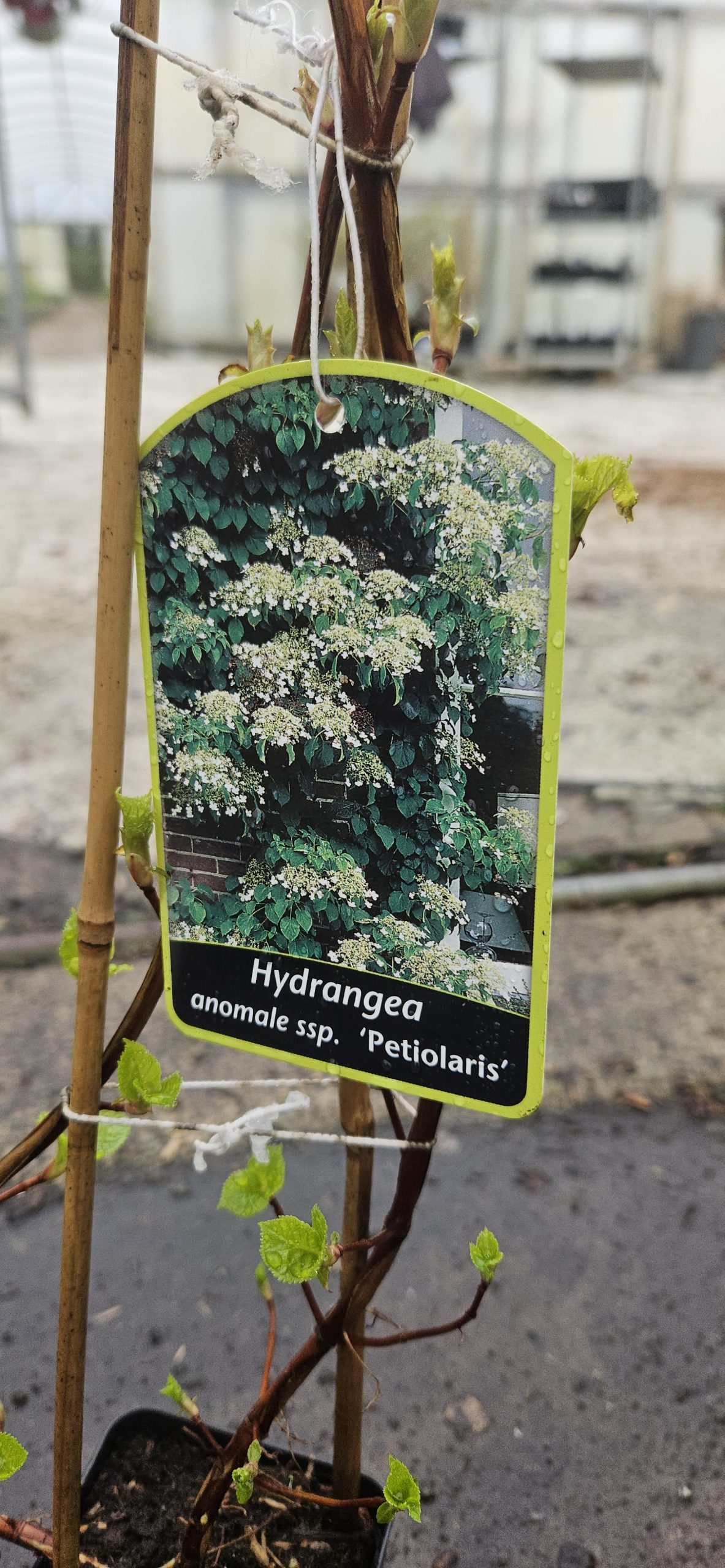
Climbing Hydrangea. A climbing shrub with dark green leaves and masses of showy, lacy white flowerheads in summer. Thrives in some of the most shady parts of the garden. Height 15m. Spread 3m. Flowers July to August. Partial Shade. Hardy.
Hydrangea petiolaris is a vigorous, self-clinging climbing shrub known for its beautiful lacy white flowerheads and ability to thrive in shaded areas. Ideal for walls, fences, and tree trunks, Hydrangea petiolaris brings structure and seasonal interest to otherwise difficult spaces.
PLANTING and AFTERCARE GUIDE
Best Planting Time
Spring: Plant Hydrangea petiolaris in spring when the soil is workable and warming, helping roots establish before active growth.
Early Autumn: Early autumn planting also allows time to settle in and develop a strong root system before dormancy.
Site Selection
Sunlight: Choose a position in partial shade. Hydrangea petiolaris performs particularly well in shaded or north-facing areas.
Soil: Moist, well-drained soil enriched with organic matter is ideal to support healthy growth and flowering.
Planting Instructions
Prepare the Hole: Dig a hole twice the width of the root ball and the same depth to allow roots to spread easily.
Soil Preparation: Mix compost or well-rotted organic matter into the soil to improve moisture retention and fertility.
Planting: Position Hydrangea petiolaris with the root ball level with the soil surface, then backfill and firm gently.
Watering After Planting: Water thoroughly to settle the soil and help your Hydrangea establish quickly.
Watering Requirements
Growing Season: Keep the soil evenly moist during active growth to support healthy foliage and flowering.
Dormant Season: Reduce watering as growth slows, but do not allow the soil around Hydrangea petiolaris to dry out completely.
Feeding
Spring: Apply a balanced fertiliser in early spring to encourage vigorous growth and flower production.
Mid-Season: A light supplementary feed can help maintain healthy foliage and flowering performance.
Pruning
After Flowering: Lightly prune after flowering to control size and shape.
Maintenance: Remove dead or damaged stems to keep Hydrangea petiolaris tidy and healthy.
Mulching
Spring: Apply a generous layer of organic mulch around the base to retain moisture and suppress weeds.
Climbing Habit: Hydrangea petiolaris is self-clinging but benefits from initial support, such as a trellis or wall, while establishing. Once mature, Hydrangea will attach itself and climb naturally.
Final Tips
Hydrangea petiolaris is a reliable, low-maintenance climber that excels in shaded areas where many plants struggle. With moist, well-drained soil and minimal care, Hydrangea will reward you with beautiful blooms and lush foliage year after year.



 Select options

Reviews
There are no reviews yet.