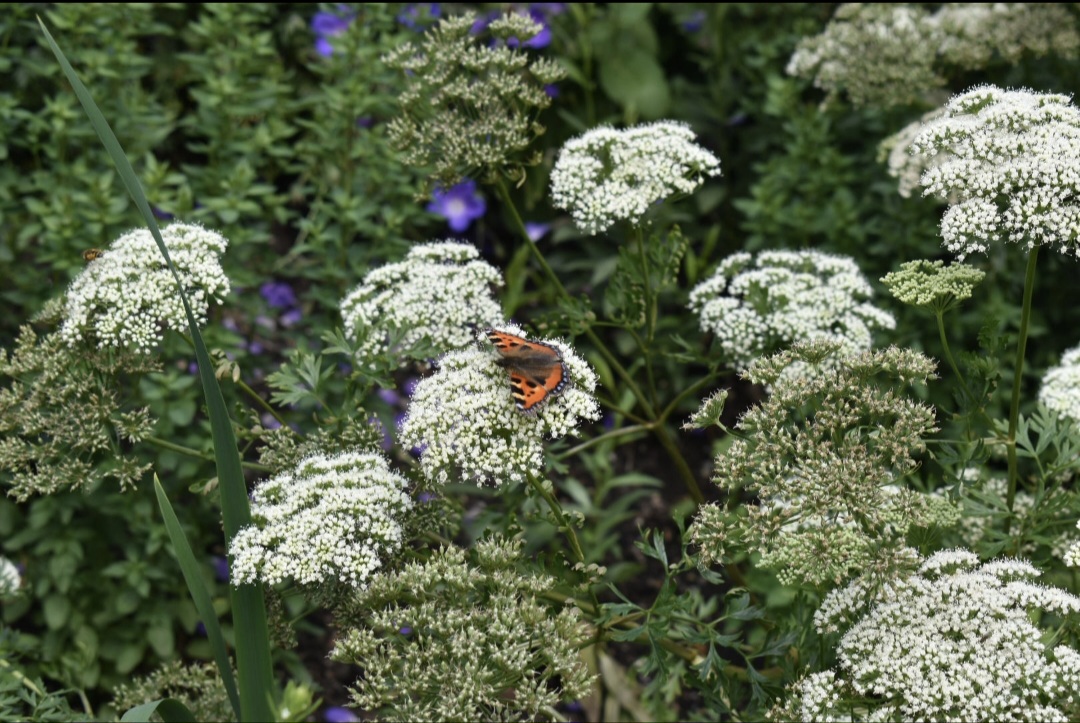
Baltic Parsley. An elegant herbaceous perennial with large flat umbels of tiny white flowers from mid summer to autumn. Attractive lacy, deeply cut, fern-like foliage. Self-seeds. Height 1.5m. Spread 50cm. Full sun/partial shade. Moist, well drained soil. Hardy.
Cenolophium denudatum is an elegant herbaceous perennial grown for its airy white flower umbels and attractive fern-like foliage. It adds height, texture, and movement to mixed borders, naturalistic planting schemes, and wildlife-friendly gardens, often self-seeding gently to create a relaxed display.
PLANTING and AFTERCARE GUIDE
Best Planting Time
Spring: Plant Cenolophium denudatum in spring when the soil is workable and beginning to warm. This allows the roots to establish before active growth begins.
Early Autumn: Early autumn is another excellent planting time, giving the root system time to settle before dormancy and encouraging stronger growth the following season.
Site Selection
Sunlight: Cenolophium denudatum thrives in full sun or partial shade. A bright position encourages sturdy stems and an abundance of delicate white flower heads.
Soil: Moist, fertile, well-drained soil enriched with compost or well-rotted organic matter provides ideal growing conditions and supports healthy foliage.
Planting Instructions
Prepare the Hole: Dig a hole twice the width and the same depth as the root ball to give the roots plenty of room to establish.
Soil Preparation: Mix compost or organic matter into the excavated soil to improve fertility, moisture retention, and soil structure.
Planting: Position Cenolophium denudatum so the top of the root ball sits level with the surrounding soil, then backfill gently and firm lightly.
Watering After Planting: Water thoroughly after planting to settle the soil and encourage rapid root establishment.
Watering Requirements
Growing Season: Keep the soil evenly moist during active growth, particularly while the plant is becoming established and during prolonged dry periods.
Dormant Season: Reduce watering as growth slows, but do not allow the soil around Cenolophium denudatum to dry out completely.
Feeding
Spring: Apply a balanced fertiliser in early spring to promote healthy foliage and abundant flowering.
Mid-Season: A light supplementary feed can help maintain vigorous growth throughout the flowering season where soil fertility is low.
Pruning
Deadheading: Remove faded flower heads if you wish to reduce self-seeding, or leave some in place to encourage natural spreading.
Seasonal Care: Cut back old stems once flowering has finished or leave them until late winter to provide additional garden interest.
Mulching
Spring: Apply a generous layer of organic mulch around the base to conserve moisture, suppress weeds, and improve soil quality.
Later in the Year: Replenish the mulch when necessary, ensuring it remains clear of the crown to encourage healthy growth.
Supporting the Plant
Natural Habit: Cenolophium denudatum generally develops upright stems, although plants growing in exposed areas may benefit from discreet support as they reach full height.
Final Tips
Cenolophium denudatum is a graceful, low-maintenance perennial that brings softness and natural beauty to the garden. With fertile, moisture-retentive soil, regular watering during establishment, and minimal maintenance, Cenolophium denudatum will provide elegant flowers and attractive foliage year after year.



 Select options

Reviews
There are no reviews yet.