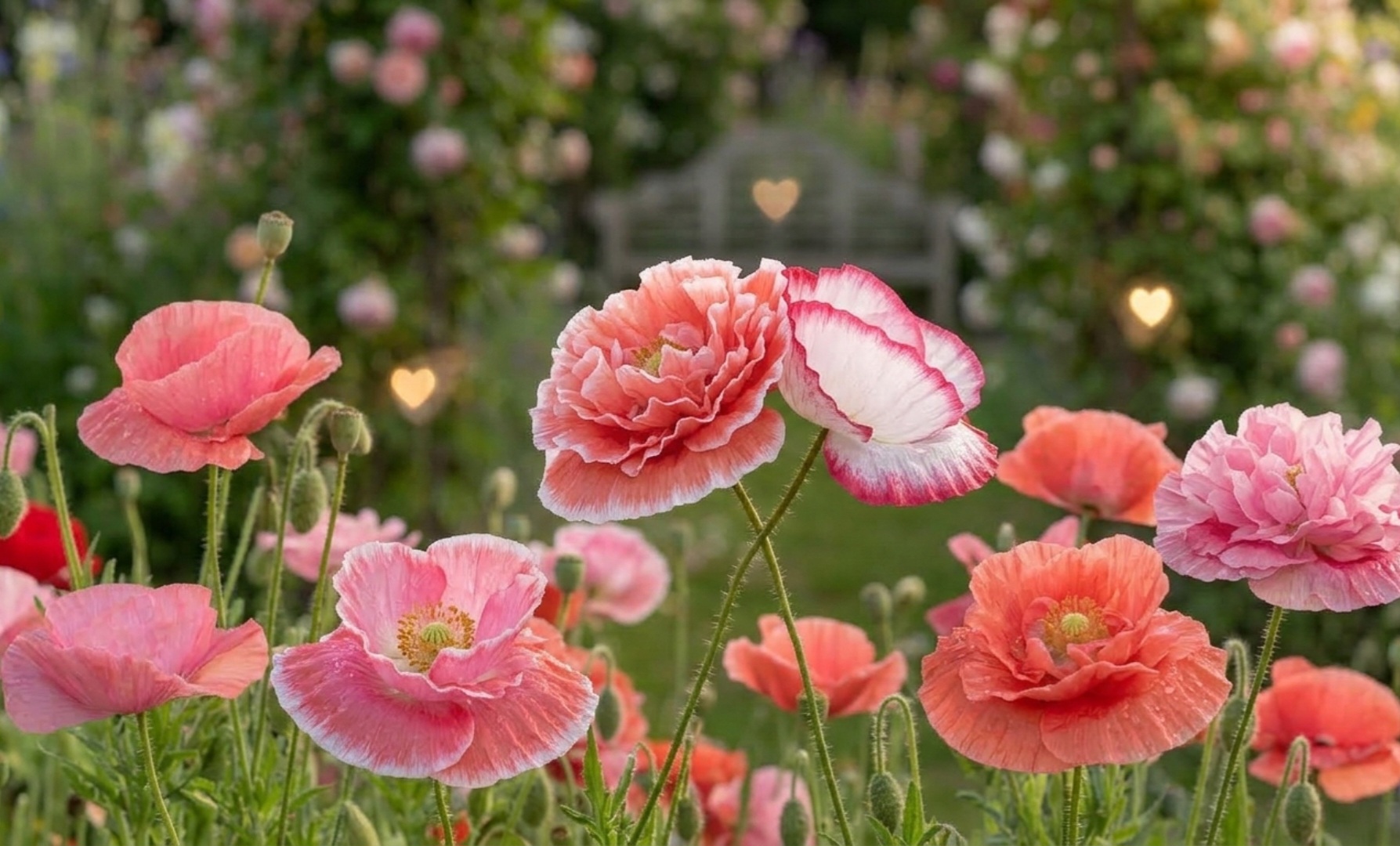
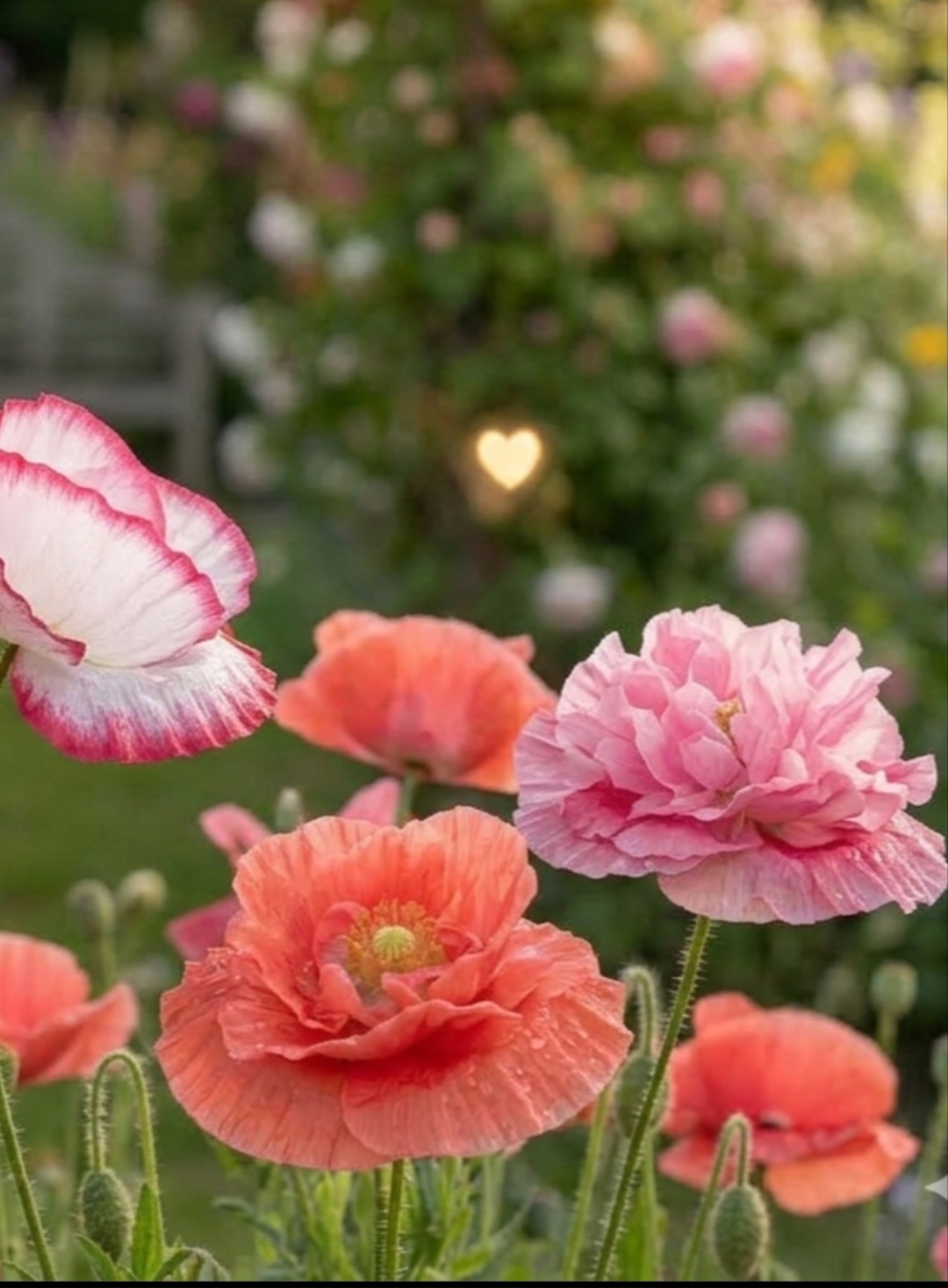
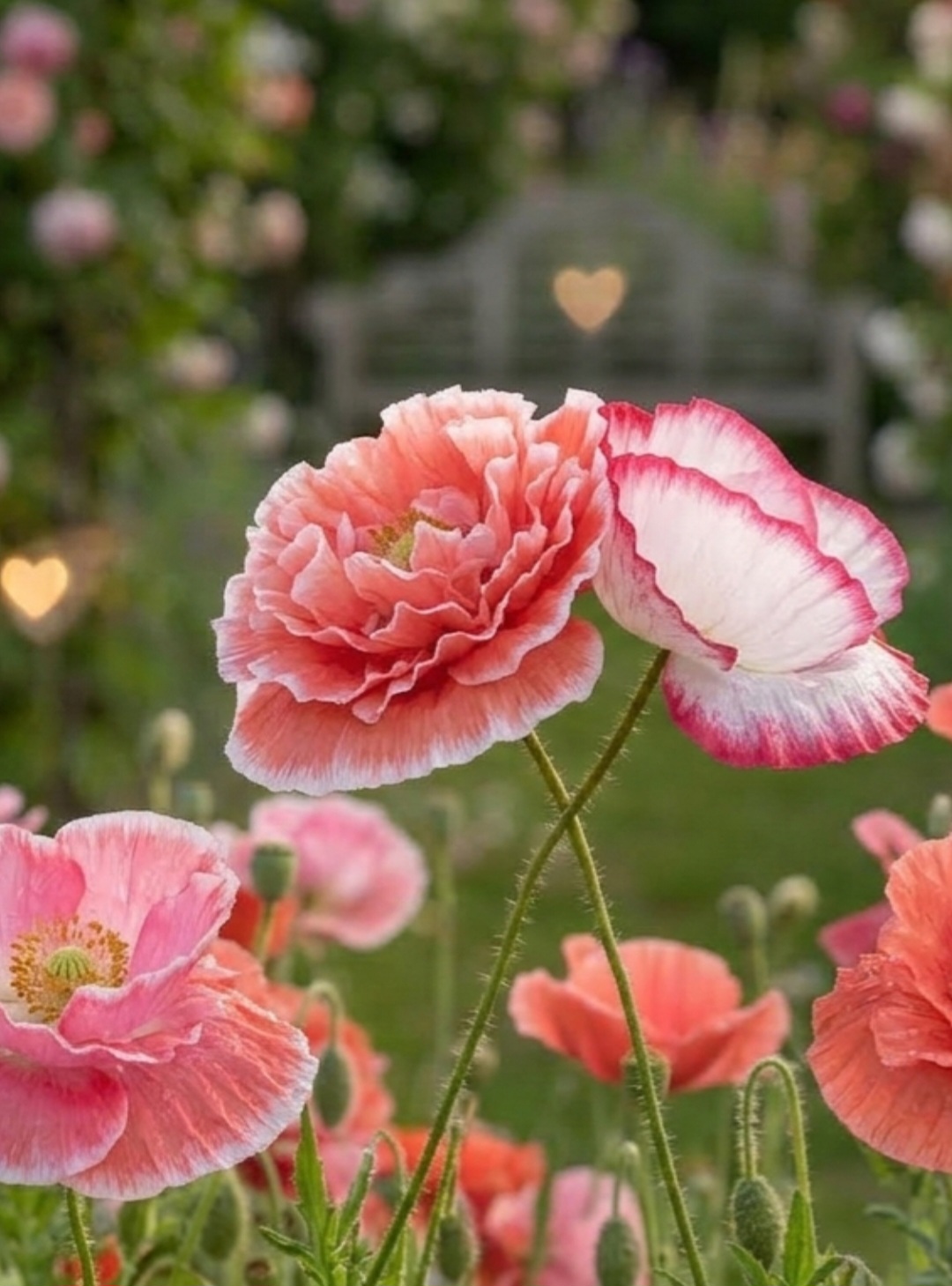
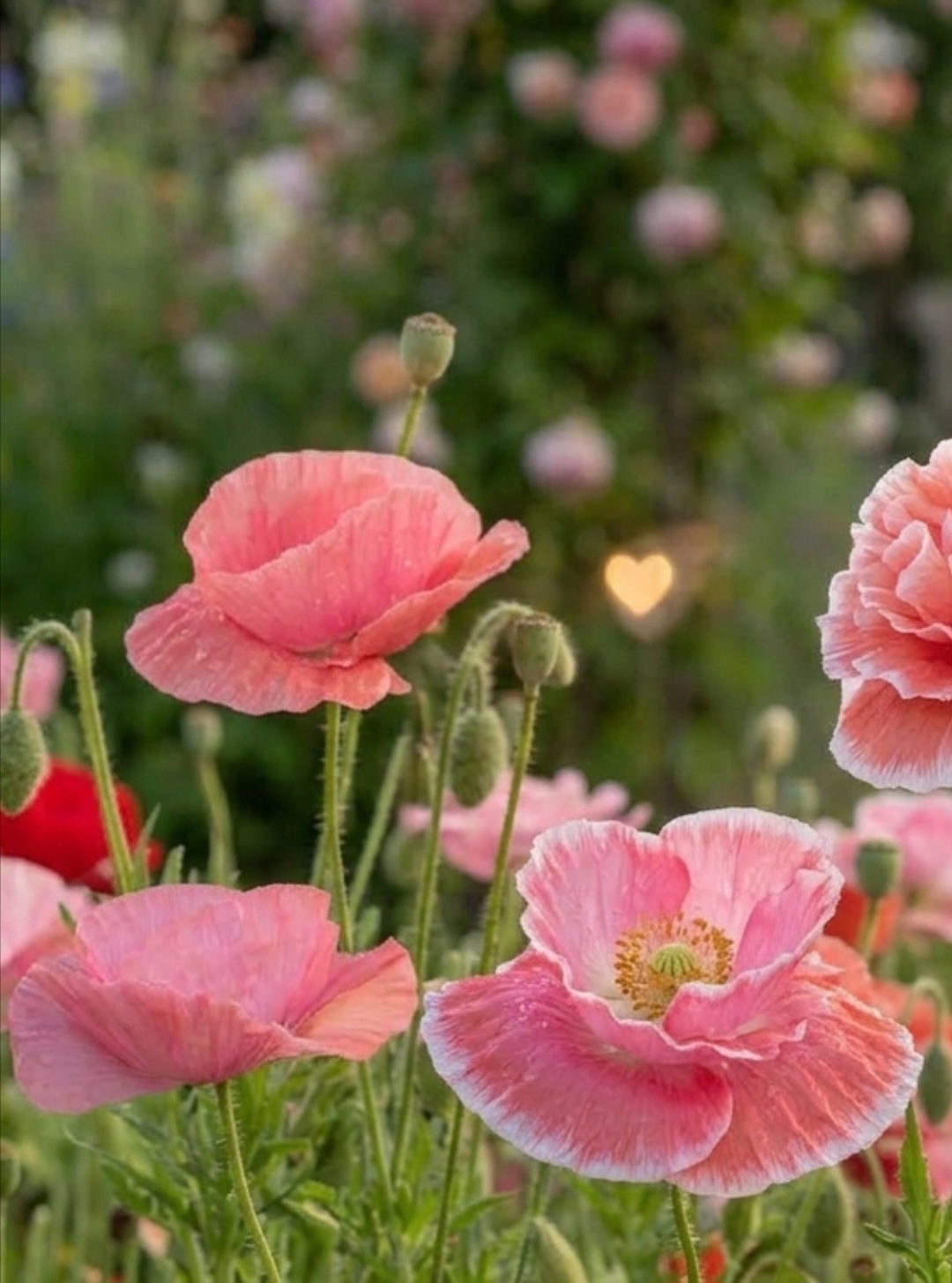
Papaver rhoeas ‘Falling in Love’ is a beautiful annual poppy that produces romantic pastel blooms throughout summer. Moreover, it is easy to grow and ideal for borders, wildflower gardens, and cottage garden planting schemes.
PLANTING and AFTERCARE GUIDE
Best Planting Time
First, plant Papaver rhoeas ‘Falling in Love’ in spring or early autumn when the soil is workable and not too wet. This allows roots to establish well before flowering begins.
Site Selection
Sunlight: Papaver prefers a position in full sun, where it will produce the best flowers and strong stems.
Soil: Well-drained soil is important. Therefore, improve heavy soil with compost or grit to ensure good drainage and healthy root growth.
Planting Instructions
When planting, follow these steps:
- Dig a hole twice the width of the root ball and the same depth.
- Improve the soil with compost if needed.
- Place the plant so the top of the root ball is level with the surrounding soil.
- Backfill gently and firm lightly around the plant.
- Water thoroughly after planting to help Papaver rhoeas ‘Falling in Love’ establish.
Watering Requirements
Water regularly while plants are establishing. However, once established, they prefer slightly drier conditions and should not be overwatered.
Feeding
In spring, apply a light balanced fertiliser to encourage healthy growth. Additionally, avoid excessive feeding, as Papaver flowers best in relatively poor soil.
Pruning
Deadhead regularly to prolong flowering. Furthermore, allow some flowers to go to seed so Papaver rhoeas ‘Falling in Love’ can self-seed for the following year.
Mulching
Apply a light mulch around the plants to suppress weeds and retain moisture. However, keep mulch away from the stems to prevent rot and keep Papaver rhoeas ‘Falling in Love’ healthy.
Final Tips
Overall, this annual poppy thrives in sunny, well-drained conditions and requires very little maintenance. With minimal care, this Papaver will provide beautiful summer colour and may self-seed for future displays.



 Select options

Reviews
There are no reviews yet.